
31 August 2026
Defence by Chaoming Wang
Chaoming Wang defended her licentiate thesis
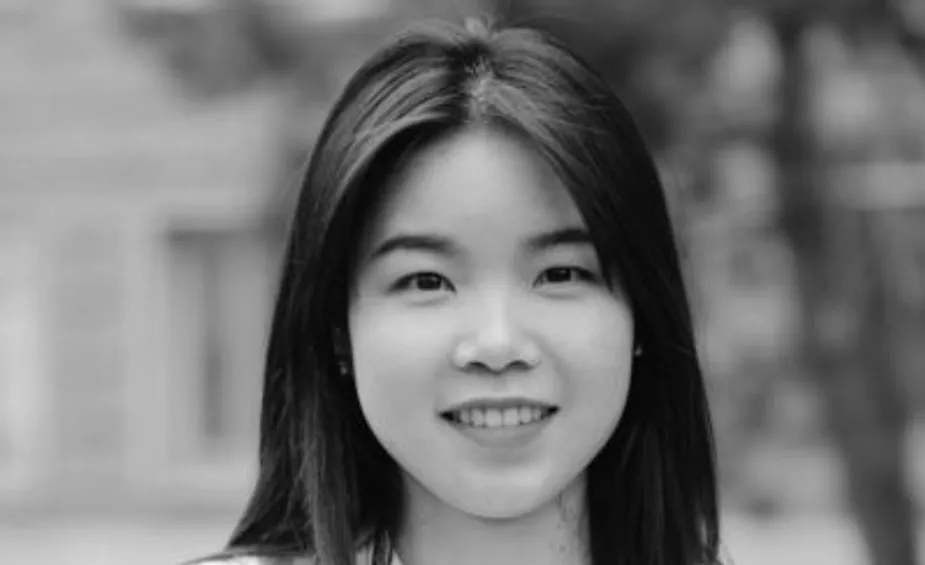
On 31 August 2026, Chaoming Wang successfully defended her licentiate thesis Supporting Data Sensemaking in Immersive Analytics: Exploring AI and Human-Centered Design Perspectives at the Department of Computer Science, Blekinge Institute of Technology (BTH).
Current mainstream visual analytics (VA) systems transform data through complex computational processes and visual representations to support users' data sensemaking processes. Compared with VA, immersive analytics (IA) offers the possibility of placing data visualizations in spatial, embodied, and interactive digital environments, which may benefit users in understanding and reasoning about complex data. However, immersion alone does not guarantee understanding, especially for high-dimensional, relational, or complex computational data. Therefore, this thesis is motivated to investigate how data sensemaking in IA can be supported through artificial intelligence (AI) support and human-centered visual and interaction design perspectives.
The thesis includes four papers to address this problem. The first part examines how AI is currently positioned in IA (Papers I and II). A systematic review (Paper I) of AI-supported IA identifies the application domains, techniques, and workflow stages in which AI has been used, including data collection, data transformation, visual presentation, knowledge generation, and evaluation. The review shows that the field is still fragmented, with limited empirical evidence on how AI support affects users’ sensemaking. This discussion is then extended to generative AI in Paper II, where the thesis identifies opportunities and risks related to multisensory interaction, 3D representation, rapid prototyping, transparency, and user control. The second part (Papers III and IV) moves human-centered visual and interaction design perspectives with empirical user evaluation. In Paper III, a mobile VR study investigated immersive visual cues for interpreting nonlinear dimensionality reduction results, focusing on feature attribution, local reliability, and neighborhood relationships. In Paper IV, a further VR prototype explored interaction design for multivariate network analysis, using a formative pilot study to examine how users manipulate, filter, and inspect relational data in an immersive environment.
The thesis concludes that data sensemaking in IA can be supported by AI techniques and human-centered design, and that they can potentially work complementarily in an IA workflow. The thesis contributes an integrated account of these complementary forms of support and identifies methodological and design implications for future human-centered AI-supported IA systems.
The defence was examined by Prof. Veronica Sundstedt (main supervisor), with additional supervision from Dr. Valeria Garro and Assoc. prof. Prashant Goswami, and , all from BTH. The opponent for the seminar was Senior Assoc. Prof. Mario Romero from Linköping University, Sweden
The Department of Computer Science hosted a reception following the seminar to celebrate this milestone.
Chaoming’s contribution adds valuable insight to the HINTS research environment by exploring how AI and human-centered design can support data sensemaking in immersive analytics and inform the development of future human-centered AI-supported systems.
Find the thesis and abstract here:
https://urn.kb.se/resolve?urn=urn:nbn:se:bth-30297 External link, opens in new window.